
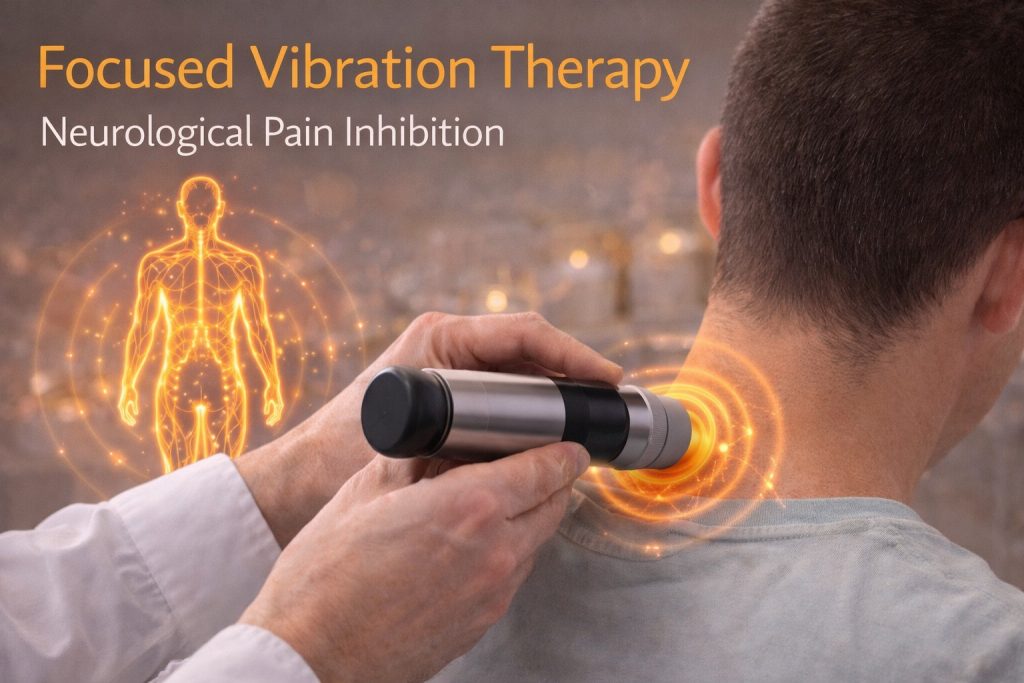
Focused Vibration Therapy: Neurological Pain Inhibition
Focused Vibration Therapy involves the application of specific mechanical frequencies to the muscles, tendons, and ligaments. At the Robert McDonald Clinic, we use this as a “neurological primer” to desensitize painful areas and accelerate tissue recovery.
The Science: The Tonic Vibration Reflex (TVR)
Vibration therapy works by communicating with the brain through the skin and muscle spindles at high speeds.
- Gate Control Theory: Vibration travels along “large-diameter” nerve fibers faster than pain signals travel along “small-diameter” fibers. By flooding the nervous system with vibration, we effectively “close the gate” on pain, providing immediate relief for acute and chronic discomfort.
- The Tonic Vibration Reflex: When a specific frequency (typically between 30Hz and 150Hz) is applied to a muscle, it triggers a subtle, involuntary contraction and relaxation cycle. This “resets” muscle spindles that have become stuck in a state of chronic tension or guarding.
- Increased Microcirculation: Localized vibration creates a “pumping” effect in the capillaries, significantly increasing blood flow and lymphatic drainage to clear inflammatory markers from the injured site.
- Restores Cellular Rhythm: Delivers precise 8-12 Hz mechano-magnetic oscillations that sync with your muscles’ natural vibrations, gently “tuning” cells like a massage for your body’s core engine.
- Rebalances Tissues: Micro-stretches muscles, fascia, and the extracellular matrix, easing spasms, reducing inflammation, and normalizing nerve-muscle tension without forceful pressure.
Clinical Research & Evidence
Modern sports science and physical medicine have validated vibration as a potent therapeutic tool:
- Reducing Delayed Onset Muscle Soreness (DOMS): Research indicates that vibration therapy applied after intense activity significantly reduces lactic acid buildup and muscle soreness compared to rest alone.
- Bone Density & Tendon Health: Studies show that mechanical vibration stimulates osteoblasts (bone-building cells) and increases the tensile strength of tendons, making it an excellent recovery tool for tendonitis and early-stage osteoporosis.
- Neuropathy & Sensory Loss: In clinical trials, localized vibration has been shown to improve proprioception (the body’s awareness of its position) in patients suffering from peripheral neuropathy or post-surgical numbness.
What It Treats
- Chronic Pain Relief: Eases neck, back, and spine tension—ideal for desk workers or those with persistent muscle knots that manual therapies can’t fully reach.
- Injury Recovery: Accelerates rehab from sports strains, post-surgery swelling, or joint stiffness, enhancing flexibility and mobility for quicker return to activities.