
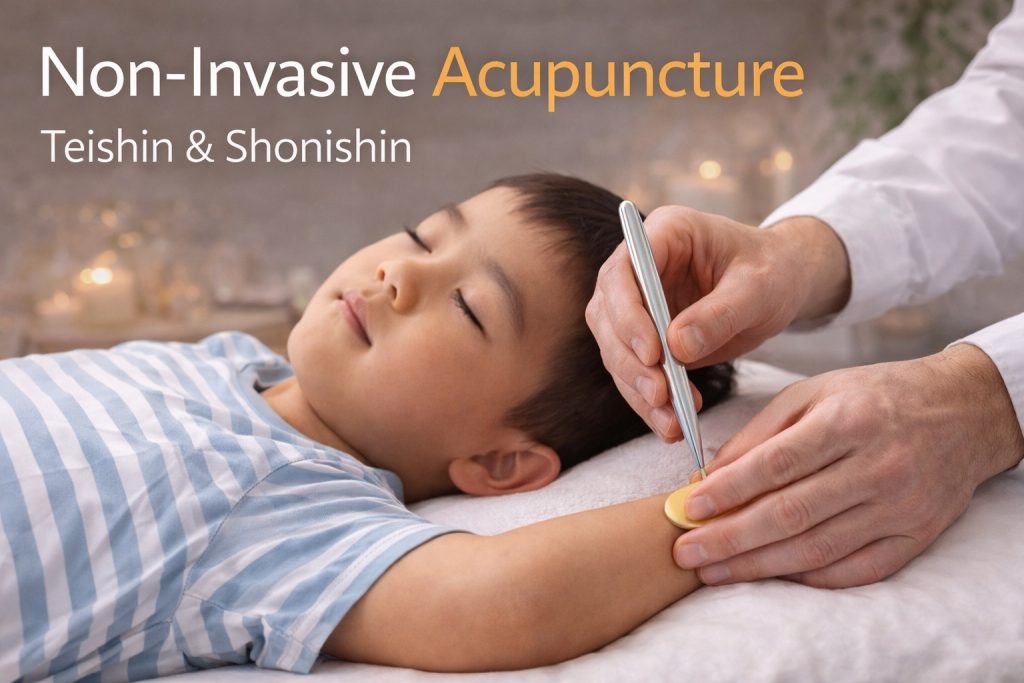
Non-Invasive Acupuncture: Teishin & Shonishin
At the Robert McDonald Clinic, we believe that healing doesn’t always require a needle to break the skin. By utilizing specialized Japanese tools, we can achieve profound neurological results through the skin’s surface.
Teishin: The Contact Needle
A Teishin is a specialized, non-piercing needle typically made of gold, silver, or titanium. Rather than being inserted, it is held against the skin or used to gently tap specific points.
- The Science of Touch: The skin is our largest sensory organ. Teishin works by stimulating mechanoreceptors and Merkel cells. These cells translate physical pressure
into electrical signals that travel to the brain, triggering the release of calming neurotransmitters like oxytocin and dopamine.
- The “Gold & Silver” Effect: In Japanese medicine, different metals have different “ionic” properties. Gold is used to “tonify” (energize) areas of deficiency, while silver is used to “disperse” areas of excess heat or tension.
- Who it’s for: This is the gold standard for patients with extreme needle sensitivity, “thin” energy (chronic fatigue), or those who are in such acute pain that traditional needling would be too stimulatory.
2. Shonishin: Pediatric "No-Needle" Acupuncture
Shonishin (translated as “little person needle”) is a specialized form of treatment designed specifically for infants and children. Instead of needles, practitioners use a variety of small, hand-held tools to perform rhythmic stroking, tapping, and rubbing.
How it Works: Children’s nervous systems are incredibly reactive. Shonishin focuses on the Dermatomes—areas of the skin supplied by specific spinal nerves. By gently stimulating these pathways, we can regulate the child’s developing Autonomic Nervous System.
- The “Gentle Reset”: Shonishin is often called “the acupuncture that isn’t.” Children usually find the treatment playful and relaxing; many even fall asleep during the session.
Commonly Treated Pediatric Conditions:
- Digestive Issues: Colic, constipation, and reflux.
- Respiratory Health: Asthma, chronic cough, and allergies.
- Sleep & Mood: Insomnia, night terrors, and ADHD/hyperactivity.
- Immune Support: Frequent colds or ear infections.
Clinical Research: The Power of Surface Stimulation
Modern research in Bio-Electromagnetics supports the efficacy of non-insertive techniques:
- Skin Conductivity: Acupuncture points have lower electrical resistance than the surrounding skin. Teishin tools act as “conductors” that can influence the bio-electric field of these points without penetration.
- Vagal Tone: Shonishin has been shown to improve Heart Rate Variability (HRV) in children, a primary marker for a healthy, resilient nervous system.
- Somatosensory Processing: These techniques help the brain “re-map” areas of chronic pain or sensory processing issues, making them effective for conditions like Fibromyalgia or Sensory Processing Disorder.
| FEATURE | TEISHIN (Contact Needle) | SHONISHIN (Pediatric Style) |
| Primary Tool | Single metal wand (Gold/Silver). | Set of small tools (Brushes, Combs, Rollers). |
| Technique | Static pressure or gentle tapping. | Rhythmic stroking and “skin-brushing.” |
| Best For | Chronic Fatigue, Anxiety, Needle Phobia. | Infants, Children, and Hyper-sensitive adults. |
| Goal | Regulating specific point energy. | Balancing the entire sensory nervous system. |